by John McClean
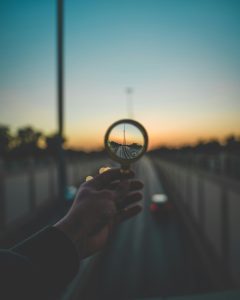
(Photo: Yosef (jossy) Futsum on Unsplash)
Lots of people around us are asking, one way or another, “What is life for?” Does it make sense? Is there a purpose to any of it? Sometimes it’s an existential question — why get out of bed? More often it shows up in specific parts of life. Young adults can’t see the point of having children. It was once assumed that marriage and raising the next generation was simply part of being an adult, that was the job of each generation. Gen Z are not so sure. The same goes for education and work. It is not clear a degree leads to a good job anymore, and AI might mean there won’t be many “good jobs” left. We’re surrounded by people asking “what is it for?” Or not even asking, because they’ve already decided a lot of life is pointless.
The psychologist John Vervaeke has named this the “meaning crisis”. He connects it to our mental health crisis, made worse by despair about the environment and politics, but says something even deeper is going on. We’ve lost a sense of our place in the world, and of who we are and what we’re meant to do with ourselves.
He describes “the decentering of human life from its cosmic significance, a decline in our sense of purpose, and a sensation of having lost the soul that gave earlier human societies their adaptiveness and vitality. It seems we are left with a feeling of having lost our place in the world along with a sense of who we are and what we ought to do with ourselves.” (John Vervaeke and Christopher Masterripietro, Awakening from the Meaning Crisis, Book One: Origins. 2024).
The crisis reaps what our culture has sown for the last three centuries. There was a time when almost everyone in European culture assumed that people, and life, and the world had a purpose, built-in, because God had made it that way. The word for that was telos: an end, in the sense of goal or purpose. Everything had a telos, and so was “for” something. That is obvious in things we make; tools and food and furniture have a function. The old view was that people do too. Part of our purpose is relationship, living socially; marriage is one of the fullest expressions of that, with its own purpose of companionship and raising children. Government and rulers had a purpose: promoting the common good, creating the conditions for people to flourish. The non-human world of bush, mountains, animals, all of it has purpose. The whole cosmos was infused with telos.
From about 350 years ago, Western thought started getting rid of that built-in purpose. The French philosopher Renee Descartes was key to the change. He thought that an object is just its physical form, its dimensions, position and motion. There is no “telos” in a material thing. He wrote that it is rash to inquire into God’s ends, since we cannot fathom them, and they are unhelpful for physics regardless. While he thought that human action and God’s will might have purposes, the physical world did not. So the father of modern philosophy set the trajectory for the loss of telos. Things, and eventually people, became just their material existence, with no goal built in.
The result seemed exciting at first since it gives us power . It is up to us to create or choose or impose a purpose. A 20th century French philosopher Jean-Paul Sartre put it, “Man is nothing else but what he makes of himself.” So when we ask “what is life for?”, the only answer on offer is “it’s up to you”. And we find we can’t generate enough of an answer on our own. We are left wondering if there is really a point to marriage, education, work, life.
Our world has a telos
The Christian view is different: God has made the world and everything in it and set it up with purpose. We live in a world with telos. That gives two great benefits. The first is direction. If you know that marriage is about faithful companionship and raising children, you can lean into that, rather than staring at a blank page. If you know education is about developing mature, creative, virtuous people, not just producing productive workers, that shapes how you go about it. The Christian version of telos also gives hope. It says God directs things to their proper end, and how they get there. So we can be hopeful and confident that our efforts in education, work and raising children won’t be wasted.
It sets up the question that really matters: where does creation end up? The big point is: there is a telos. The world will reach its proper end. Seeing that should set our direction and give us hope. Next, this series will look at the last chapters of the Bible, Revelation 21 and 22, to see what that end looks like, and how that gives direction and hope.
[This is the first post in a three-post series. View post 2 and post 3.]